InfoScale / Compliance

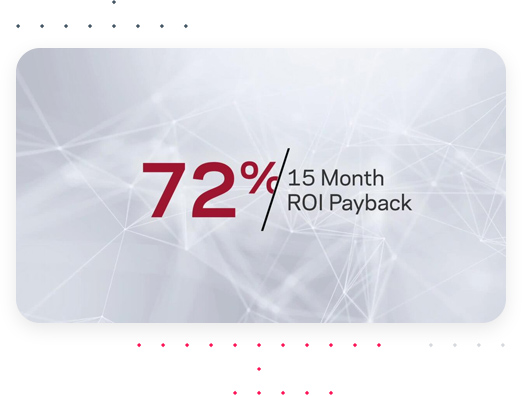
Deliver application performance that exceeds SLAs (Service Level Agreements)
across every IT platform.
- Protect business-critical applications that require zero downtime
- Run high availability and disaster recovery scenarios with confidence
- Orchestrate mission-critical services across physical, virtual, cloud,
and on-premises environments
Achieve application availability and mobility
on-premises or in the cloud.
- Support hybrid cloud deployments to minimize cloud service disruption
- Gain agility to move workloads as business needs change
- Simplify complex multi-tier service orchestration for reliable outcomes
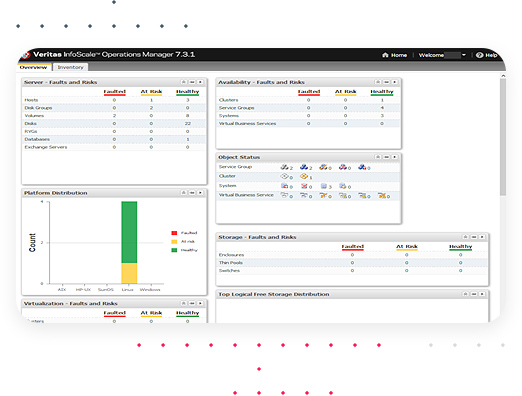
Strengthen application mobility to achieve optimal performance
and predictable operating costs
- Reduce costs by migrating applications and data to the cloud
- Move across physical, virtual, cloud, and container platforms
- Avoid inefficiencies caused by vendor lock-in
Persistent storage and workload mobility
for enterprise environments
- Build resilience with automatic or manual disaster recovery and fast failover for node failures
- Gain mobility by easily migrating persistent storage volumes across hybrid cloud environments
- Improve efficiency by creating multiple classes of persistent volumes using existing servers and SAN storage
for Container Environments
InfoScale for Kubernetes is a cloud-native solution that delivers near-instant detection and disaster recovery
failover. Organizations can run containers effectively and with confidence using this solution.
- Ensure resilience with automatic/manual disaster recovery and rapid node failover
- Achieve superior mobility by easily migrating persistent storage volumes across multi-cloud environments
- Increase efficiency by building container-based applications and persistent storage classes on existing cloud storage

What is the
Arctera Unified Platform?
The Arctera Unified Platform is a communication governance platform that delivers compliance intelligence across enterprise communications and data. It helps compliance, legal, risk, and IT teams maintain consistent supervision, defensible records, and trusted access to information across workflows.
Built on a unified data foundation, the platform captures each communication once, preserves it with full context at creation, and supports archiving, supervision, and discovery in a single system. By eliminating fragmented systems, you no longer need to move, copy, or reconstruct data for audits, investigations, or legal response.
Where Gaps Commonly Occur
- Communications are captured but not usable for supervision
- Inconsistent classification across channels leads to uneven retention
- Discovery results vary by system or indexing limitations
- Data must be reprocessed to reconstruct conversations
- Limited visibility into how governance decisions were applied

Supported Communication Platforms
The Arctera Unified Platform uses a unified data foundation to collect and manage communications and related enterprise data across a broad range of systems. Communications are ingested from collaboration, messaging, voice, financial, and AI platforms and standardized into a consistent structure at capture. Supervision, retention, and discovery workflows can then operate across sources without system-specific processing or data reconstruction. Every record is preserved with full context—including content, metadata, participants, and relationships between interactions.
Collaboration & Unified Communications
Capture conversations, meetings, and collaboration activity across unified communications platforms with full message and participant context.
Includes: Microsoft Teams, Slack, Zoom, Webex, RingCentral
Email & Storage
Capture email and stored content with full structure, attachments, and metadata to meet retention and regulatory requirements.
Includes: Microsoft Exchange, Microsoft 365, Gmail, Google Workspace, Azure Blob, Amazon S3
File Sharing
Capture document activity across file sharing platforms—including version changes, metadata, and embedded communications.
Includes: SharePoint, OneDrive, Google Drive, Box, Dropbox
Mobile, Social & Messaging
Preserve message content and activity context across mobile and social platforms, including off-channel messaging.
Includes: WhatsApp, WeChat, SMS (iMessage, Android), Telegram, Signal, LinkedIn, X (Twitter)
AI Communications
Capture AI interactions—including prompts and responses—and preserve AI-generated content for supervision, retention, and eDiscovery workflows.
Includes: Microsoft Copilot, ChatGPT
Financial Platforms
Collect structured communications from financial systems for supervision, audit, and regulatory reporting.
Includes: Bloomberg, LSEG (Refinitiv), Symphony, FX Connect, Tradeweb
What Is Communication Capture?
Communication capture is the process of recording business communications at the point of creation to ensure records are complete, accurate, and audit-ready. It helps organizations meet regulatory requirements while reducing the risk and delay of reconstructing data during audits or investigations. Within the Arctera Unified Platform, capture works across systems to maintain consistent, defensible records.

What Arctera Capture Does
- Capture communications from 130+ sources, including messaging, meetings, voice, and AI platforms
- Extend coverage beyond native tools to external and non-native communication platforms
- Ingest data directly from source systems via APIs, exports, and connector-based methods
- Preserve full interaction context—including participants, timestamps, threads, attachments, and relationships
- Standardize at ingestion for consistent review, retention, and investigation workflows
What Is Communication
Classification?
Communication classification is the process of categorizing business communications by applying labels, tags, and metadata according to defined policies. Content and context are evaluated at capture to apply consistent classification from the moment of creation and to identify attributes such as risk indicators, regulatory relevance, and business context.
By connecting these outcomes to supervision, retention, and discovery workflows, organizations can meet regulatory requirements within the Arctera Unified Platform.
What Arctera Classify Does
- Apply policy-based classification at capture across email, messaging, voice, and collaboration channels
- 250+ preconfigured policies for GDPR, HIPAA, PCI, financial services, and more
- 1,400+ pretrained patterns to detect PII, misconduct, and regulatory risk signals
- Enrich communications with tags and metadata that drive supervision, retention, and discovery processes
- Classify content beyond keywords using NLP, sentiment analysis, and language detection
- Maintain explainable classification with transparent policies, confidence scores, and validation tools

What Is Communication
Supervision?
Communication supervision is the process of monitoring, reviewing, and escalating business communications to detect policy violations, identify conduct risk, and meet regulatory requirements. It evaluates communications across channels, applies monitoring policies, and routes items through structured review and escalation workflows.
Within the Arctera Unified Platform, supervision helps compliance teams prioritize high-risk activity and maintain consistent coverage across systems while supporting requirements from regulators such as the SEC, FINRA, FCA, and MiFID II.
What Arctera Supervise Does
- Continuously monitor communications against policy-based rules to identify risk proactively
- Flag potential conduct violations, off-channel activity, and anomalous communication patterns
- Reduce false positives by filtering low-risk content (e.g., disclaimers, known senders) using classification and thresholds
- Prioritize items using relevance scores that learn continuously from reviewer activity and policy signals
- Route high-risk communications to reviewers by role, department, and policy
- Support review of voice, video, and multilingual communications with transcription and translation

What Is Communication
Archiving?
Communication archiving is a governance capability that preserves business communications as complete, immutable records for compliance, legal, and audit use. It helps organizations meet regulatory requirements such as SEC 17a-4, FINRA, FCA, and MiFID II while maintaining full context, metadata, and records of governance continuity.
Within the Arctera Unified Platform, archiving supports policy-based retention, legal hold, and defensible disposition—without duplication or reprocessing.
What Arctera Archive Does
- Store communications in immutable, WORM-compliant repositories with full context and metadata
- Enforce policy-based retention schedules across users, content types, and jurisdictions
- Apply hold, legal hold, and disposition policies according to classification and regulatory rules
- Maintain complete audit trails and governance continuity for all archived records
- Enable fast, high-performance search and retrieval for discovery and regulatory response
- Centralize multi-channel communications and data in a single governed record system

What Is Communication
Discovery?
Discovery (eDiscovery) is the process of identifying, searching, analyzing, and producing electronically stored communications for litigation, regulatory matters, and internal investigations. It enables legal, compliance, and investigation teams to reconstruct conversations, filter relevant data, and manage review and export workflows across email, messaging, files, and voice.
Within the Arctera Unified Platform, discovery operates on the unified data foundation—preserving metadata, relationships, and audit trails so outputs are complete, traceable, and defensible, without duplication or reprocessing.
What Arctera Discover Does
- Search communications and data using full-text and metadata filters
- Apply filters by custodian, date, keyword, classification, and source
- Reconstruct conversations and relationships across messages, files, and attachments
- Organize data by case using tags, legal hold, and redaction controls
- Operate on archived data to preserve chain of custody without moving or duplicating data
- Export data in standard legal formats with metadata and audit records


JUN Information & Communication Co., Ltd. ㅣ JUN INC Co., Ltd.
-
JUN Information &
Communication Co., Ltd.606-608, Building A, 11 Beopwon-ro 11-gil, Songpa-gu, Seoul (Munjeong-dong, Hyundae Knowledge Industry Center)
CEO : Cho Sung Chul, Cho Joon Hee
Business Registration No.: 215-86-36948
-
JUN INC Co., Ltd.
606, Building A, 11 Beopwon-ro 11-gil, Songpa-gu, Seoul (Munjeong-dong, Hyundae Knowledge Industry Center)
CEO : Cho Joon Hee
Business Registration No.: 324-81-02617
-
Daejeon Branch
411, 148 Cheongsa-ro, Seo-gu, Daejeon (Dunsan-dong, Magnolia)
-
Busan Branch
3107-2, Tower A, 97 Centum jungang-ro, Haeundae-gu, Busan (Jaesong-dong, Centum Sky Biz)
-
JUN USA LLC
1723 QUEENS CROSSING DR SAN JOSE, CA 95132
CEO : Cho Joon Hee
Copyrights (C) JUN Information & Communication Co., Ltd. l JUN INC Co., Ltd. All rights reserved. ㅣ Designed by Website.co.kr
